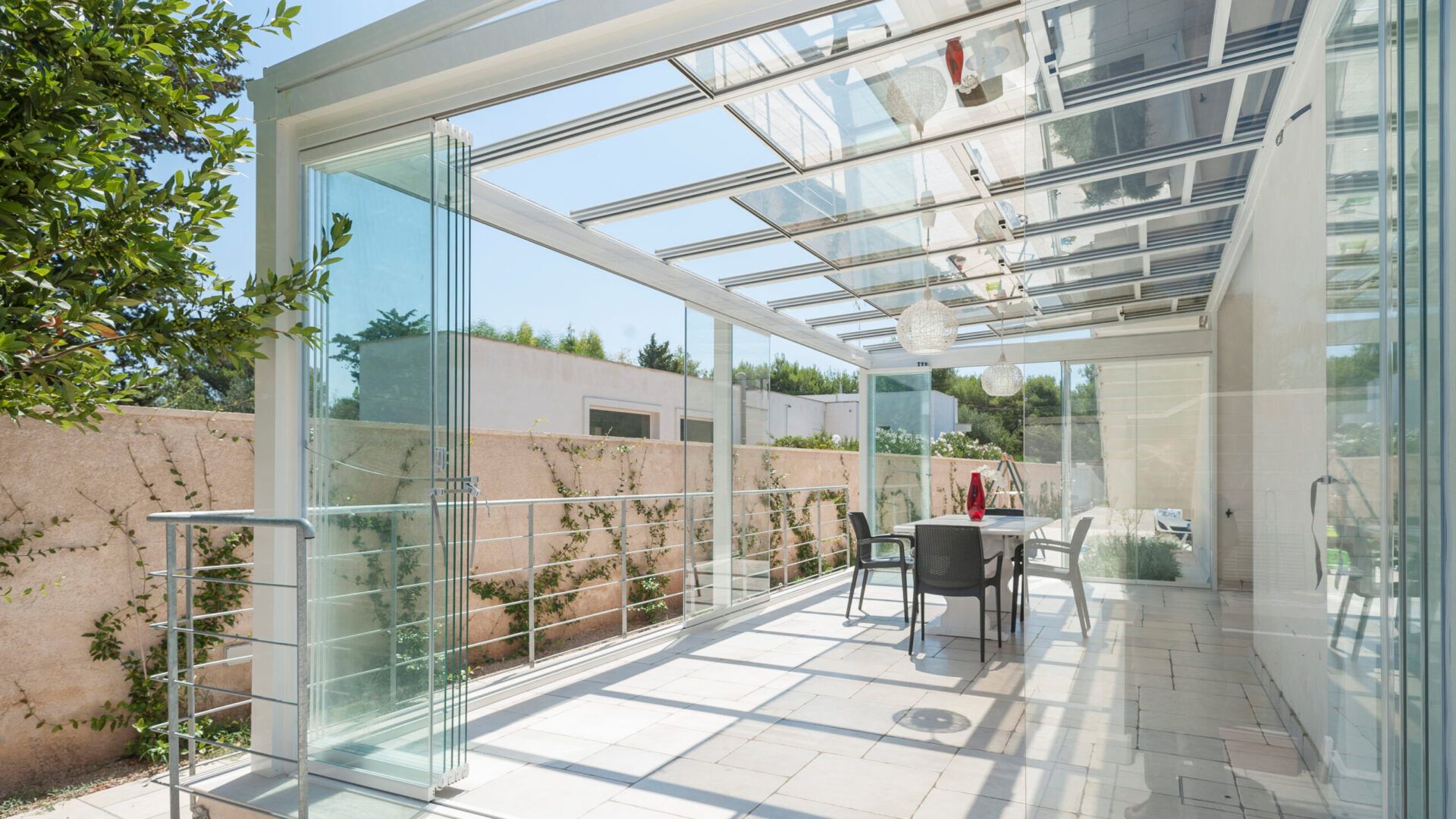
Living Outdoor spaces freely: Protezioni products for permit-free construction
Transforming your outdoor space into a welcoming environment that can be enjoyed all year round is an increasingly widespread desire. However, when considering this type of improvement, concerns about bureaucracy and regulatory complexity can often dampen enthusiasm. The good news? Recent regulatory developments have significantly simplified the framework, making many outdoor solutions accessible without the need for specific building permits, and confirming Protezioni products as part of the permit-free construction category.
Regulatory updates that simplify your life
The italian Consolidated Building Act (D.P.R. 380/2001) has undergone significant amendments that broadened the scope of permit-free construction, particularly through the addition of sub-paragraphs b-bis and b-ter to article 6, paragraph 1.
These provisions explicitly include:
- panoramic glazing systems (VEPA);
- sun and weather protection installations such as awnings, pergola awnings and bioclimatic structures featuring movable or adjustable solar shading elements, attached or annexed to buildings or individual property units.
A recent and landmark ruling by the Council of State (no. 607/2025) further clarified that pergola awnings with lateral glass enclosures may also qualify as permit-free construction, provided they maintain certain characteristics.
But what does this mean for those looking to install Protezioni products under the permit-free framework? Let’s take a closer look.
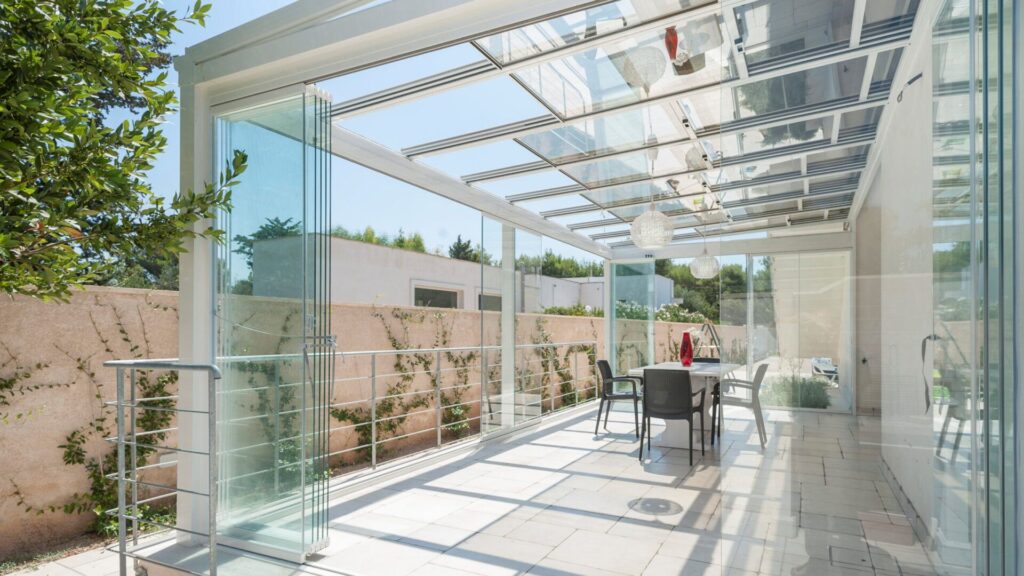
Protezioni covers: elegance and versatility within the regulatory framework
Protezioni’s wall-mounted and freestanding covers with sliding panels are a perfect example of structures that comply with permit-free building regulations. With an opening capacity of up to 80% for the Nesos and up to 75% for the Nubes, operated through integrated home automation systems, they maintain the “non-permanent” character required by law.
The Council of State ruling clarified that structures — including Protezioni solutions — fitted with lateral panoramic glazing remain under the permit-free regime because they:
- do not transform the outdoor space, but simply make it more liveable;
- preserve the original intended use of the area (terrace, balcony, garden);
- do not involve any connection to the building’s utility systems.
The minimalist design of Protezioni covers, which elegantly integrate all functional elements, also meets the “minimal visual impact” requirement set out in the regulations. Thanks to the removable nature of their components, they retain the characteristics of “temporariness” that recent case law has identified as essential for permit-free construction.
The key feature is that, despite their high technical performance, Protezioni covers do not radically transform an outdoor space into an indoor one: they simply make it more comfortable and usable under varying weather conditions, staying true to the definition of a structure that “promotes natural micro-ventilation.” They therefore fall within the scope of art. 6 of the Building Code, as does the wide range of available panel options, allowing each cover to be tailored to specific aesthetic and functional needs as well as to the applicable regulatory context.
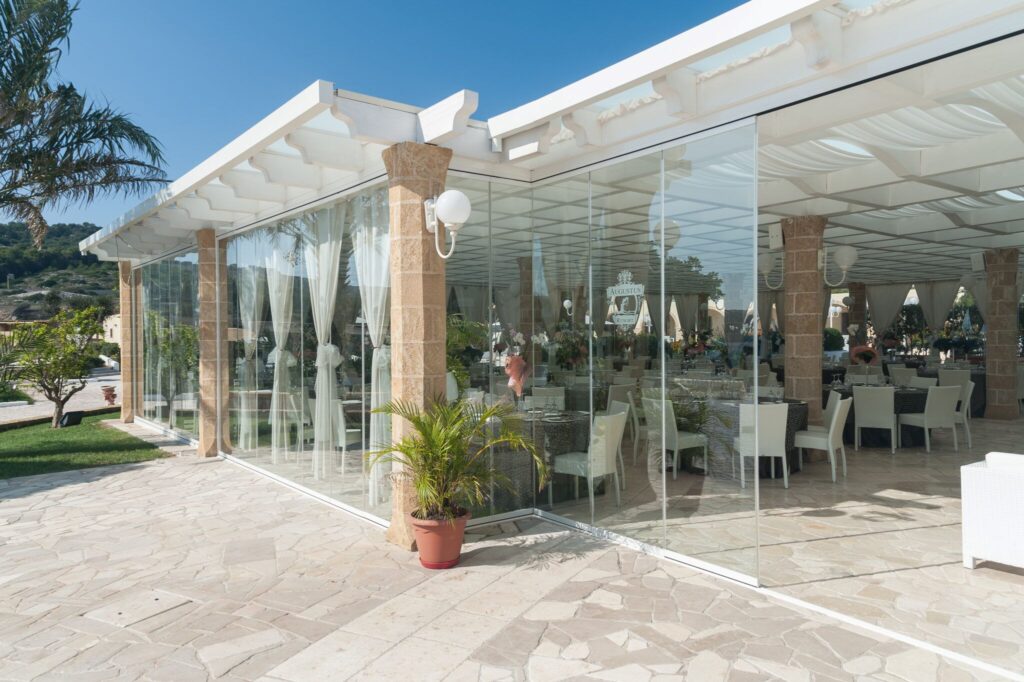
Visio: the perfect VEPA
Protezioni’s Visio panoramic glazing systems precisely embody the definition of VEPA (panoramic glazing) introduced in sub-paragraph b-bis of art. 6 of the Building Code. Here is why they are an ideal example of a permit-free product:
- they are fully transparent;
- they are easy to remove thanks to the innovative panel release system;
- they allow natural micro-ventilation;
- they protect against weather without creating permanently enclosed spaces.
In ruling no. 607/2025, the Council of State reaffirmed that structures such as Visio “do not cause the structure to lose its characteristics as a temporary enclosure of an outdoor space, nor do they transform the outdoor space into an indoor one.”
The advantages of permit-free building for clients and designers
Choosing a Protezioni product that qualifies as permit-free means:
- no need for specific building permits;
- no costs for bureaucratic procedures;
- significantly shorter project timelines;
- the possibility of removing the structure in the future without complications;
- greater design freedom.
Of course, it is always advisable to check for any stricter local regulations and, in the case of installation within a condominium, to verify compatibility with the condominium bylaws.
When aesthetics meets regulatory simplicity
Protezioni products demonstrate that it is possible to combine outstanding design, superior build quality and compliance with permit-free building regulations. There is no longer any need to choose between beauty and ease of execution: Protezioni solutions deliver both. The extraordinary manufacturing precision and attention to detail that define every Protezioni product go hand in hand with careful design that accounts for regulatory requirements, delivering solutions that are not only aesthetically flawless and functionally excellent, but also straightforward to install from a bureaucratic standpoint.
A new way of living outdoors
Recent regulatory developments, together with the technical innovation behind Protezioni products, are transforming the way we experience outdoor spaces. Balconies, terraces and gardens are no longer areas that can only be used in ideal weather conditions — they become natural extensions of the home, enjoyable in every season, without the red tape that has traditionally accompanied this type of work.
The Protezioni product range represents the perfect blend of cutting-edge technology and compliance with the latest regulations, offering solutions that not only improve quality of life, but do so in full accordance with permit-free building rules.
Note: this article is for informational purposes only and is based on legislation in force as of March 2025 and Council of State ruling no. 607/2025. For specific applications, it is always advisable to check for any local regulations, landscape protection restrictions, condominium bylaws or other constraints affecting the property.